


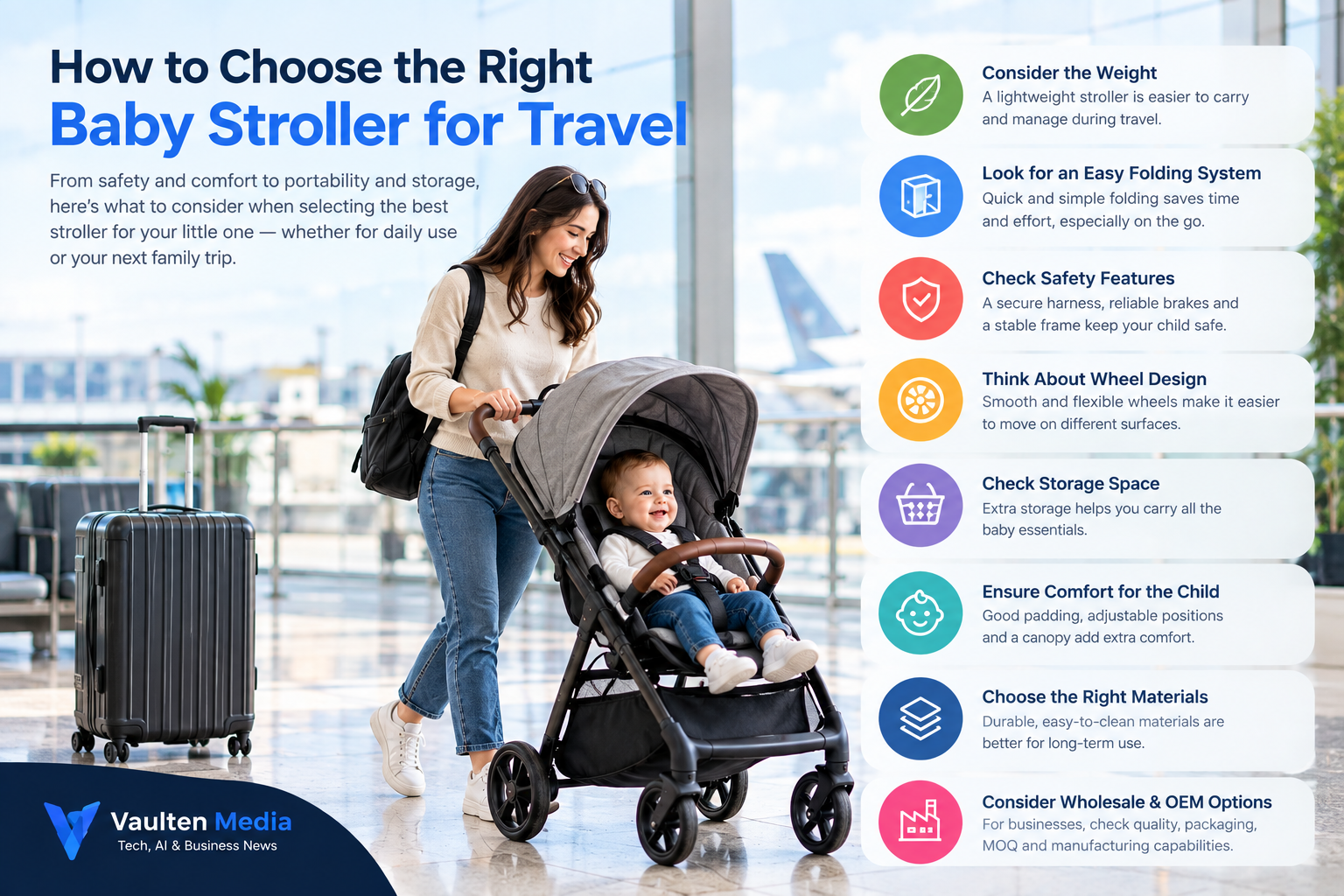
Traveling with a baby can be exciting, but choosing the right equipment can make a major difference in how comfortable and stress-free the journey becomes. Among all the baby travel products available today, a stroller is one of the most useful items for parents who spend time outdoors, travel frequently, or simply want a convenient way to move around with their child.
However, not every stroller is designed for travel. Some models are lightweight and easy to fold, while others are built for everyday use and offer more storage, cushioning, and durability. Understanding the differences can help parents and retailers make a more practical choice.
Consider the Stroller’s Weight
One of the first things to consider is the overall weight of the stroller.
A lightweight stroller can be much easier to carry through airports, train stations, hotels, shopping areas, and busy streets. Parents who travel frequently may prefer a compact model that does not become difficult to manage when combined with luggage and other baby essentials.
For retailers, weight is also an important factor when selecting products for their customers. A well-designed lightweight stroller can appeal to families who prioritize convenience and portability.
Look for an Easy Folding System
A stroller that folds quickly can save considerable time during travel.
Parents may need to fold a stroller when entering a vehicle, checking luggage at an airport, storing it in a hotel room, or moving through restricted spaces. A complicated folding mechanism can become frustrating, particularly when one parent is managing a baby and other belongings at the same time.
Ideally, the stroller should have a simple and reliable folding mechanism that can be operated without excessive effort.
Compact folding can also be valuable for retailers because customers increasingly look for products that are easy to store at home and transport while traveling.
Check Safety Features Carefully
Convenience should never come at the expense of safety.
When selecting a baby stroller, parents should examine features such as the harness system, brakes, wheel stability, frame construction, and overall balance. The stroller should be appropriate for the child’s age and size according to the manufacturer’s instructions.
A secure harness can help keep a child properly positioned while the stroller is moving. Reliable brakes are equally important when the stroller is parked on a surface.
Retailers and distributors should also pay attention to product specifications and applicable safety requirements before selecting products for their customers.
Think About Wheel Design and Maneuverability
Travel often involves different types of surfaces. A stroller may be used on smooth airport floors, sidewalks, shopping centers, parks, and uneven outdoor paths.
Wheel design can affect how easily the stroller moves across these surfaces. Smaller wheels can work well for compact travel models, while larger wheels may provide better performance on uneven ground.
The turning radius also matters. A stroller that is easy to maneuver in narrow spaces can be more convenient in crowded locations such as airports, stores, and public transportation areas.
Check Storage Space
Parents rarely travel with just a baby and a stroller.
Diapers, bottles, clothing, toys, snacks, wipes, and other essentials can quickly fill a travel bag. A stroller with a useful storage basket or additional compartments can therefore provide extra convenience.
At the same time, too much storage can increase the overall size and weight of the stroller. The ideal balance depends on how the stroller is expected to be used.
For retailers, different storage configurations can also help serve customers with different lifestyles, from short city trips to longer family vacations.
Consider Comfort for the Child
A stroller needs to be comfortable for the child as well as convenient for the parent.
Features such as seat padding, adjustable positions, a suitable canopy, and adequate support can improve the child’s experience during longer journeys. A canopy can also provide protection from direct sunlight and help create a more comfortable environment.
Parents should consider how much time their child is likely to spend in the stroller before choosing a specific model.
Choose Materials Based on Intended Use
The materials used in a stroller can influence its weight, durability, appearance, and maintenance requirements.
A strong frame can provide stability, while durable fabrics can be useful for families who expect frequent outdoor use. Easy-to-clean materials may also be valuable because baby products can quickly become exposed to food, drinks, dirt, and other messes.
For businesses purchasing strollers in larger quantities, material quality should be considered alongside manufacturing consistency and product specifications.
What Retailers Should Consider When Buying Strollers Wholesale
Businesses purchasing baby strollers for resale have additional considerations beyond appearance and basic functionality.
They may need to evaluate product quality, packaging, available models, minimum order quantities, manufacturing capabilities, customization options, and shipping arrangements.
Retailers should also understand the needs of their target customers before selecting products. A store serving urban families may have greater demand for lightweight, compact strollers, while customers in other markets may prefer larger models with additional features.
Businesses interested in sourcing products in larger quantities can review a baby stroller wholesale guide to better understand the factors involved in wholesale stroller purchasing.
OEM Manufacturing Can Offer More Flexibility
Some baby product businesses are interested in OEM manufacturing rather than purchasing standard products.
OEM arrangements can allow companies to develop products according to specific requirements, including branding, colors, packaging, product configurations, and other specifications. However, businesses should carefully evaluate a manufacturer’s capabilities before starting a production order.
Important factors can include production capacity, quality-control procedures, communication, product specifications, packaging, and delivery timelines.
A clear understanding of these areas can help reduce misunderstandings between buyers and manufacturers.
Don’t Choose a Stroller Based Only on Appearance
Modern strollers are available in many designs, colors, and styles, but appearance should not be the only consideration.
A stroller may look attractive but still be inconvenient to carry, difficult to fold, or unsuitable for the intended environment. Parents should focus on practical requirements such as weight, safety, comfort, maneuverability, storage, and durability.
Retailers should take a similar approach when evaluating products for their catalogs. A product that combines useful features with dependable construction may be more suitable for customers than one selected purely for its appearance.
Final Thoughts
Choosing the right baby stroller requires a balance between convenience, safety, comfort, and durability. For traveling families, lightweight construction, compact folding, maneuverability, and practical storage can be especially valuable.
Retailers and baby product businesses have additional factors to consider, including manufacturing capabilities, wholesale requirements, quality control, and OEM options.
Whether you’re buying a stroller for personal use or sourcing products for a business, taking time to evaluate the important features can help you make a more informed decision and find a product that fits its intended purpose.
