


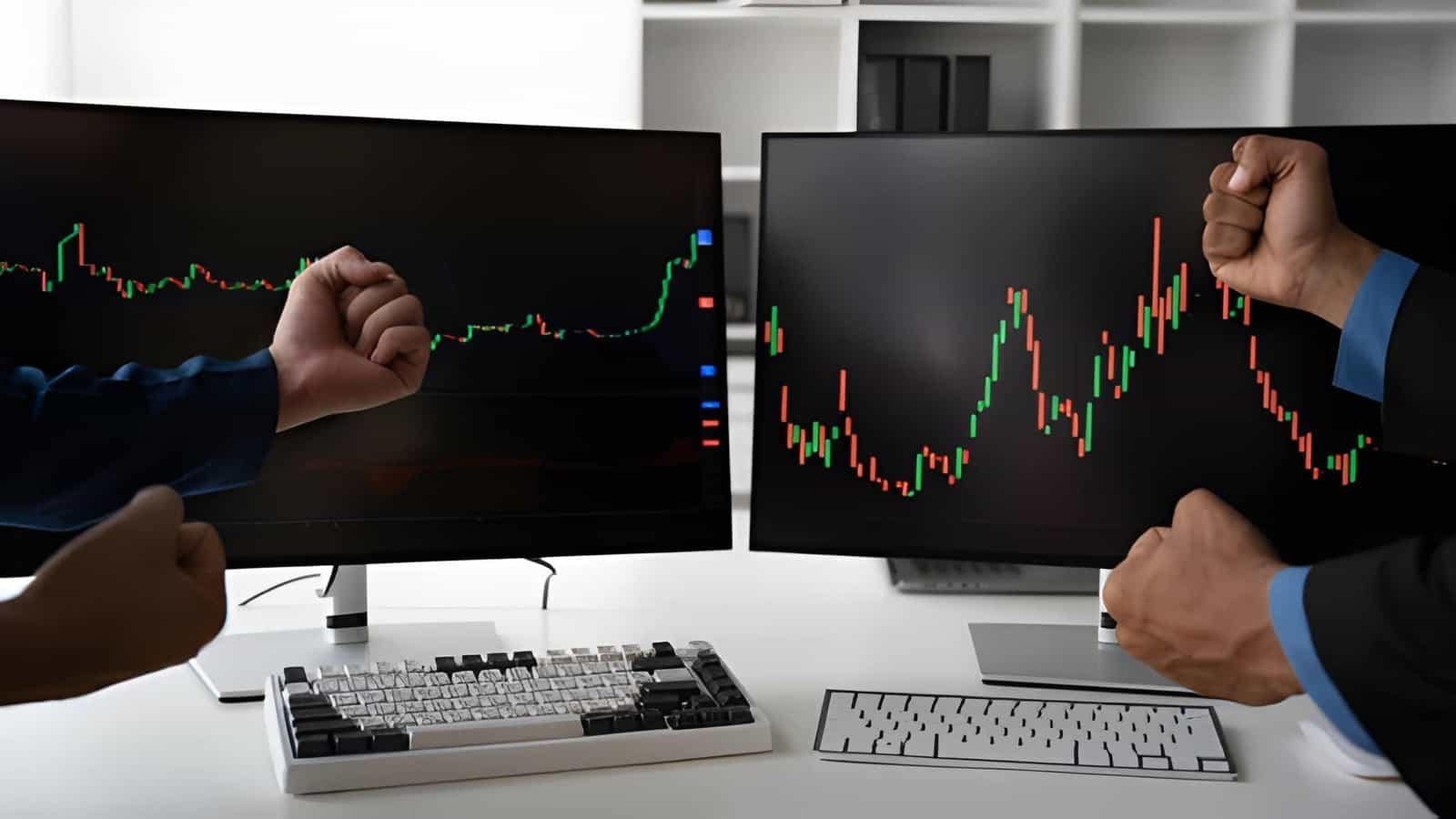
Finding reliable profitable intraday trading advice 66unblockedgames.com requires more than following a popular keyword or searching for a quick market tip. Intraday trading is a fast-moving activity in which traders open and close positions within the same trading session. Success depends on preparation, risk management, discipline, and a clearly defined strategy.
For traders researching profitable intraday trading advice 66unblockedgames.com, the most useful approach is to focus on practical principles that can be applied consistently. Rather than chasing guaranteed returns, we can build a structured process around market analysis, position sizing, entry and exit rules, and emotional control.
What Is Intraday Trading?
Intraday trading, also known as day trading, involves buying and selling financial instruments during the same trading session. Unlike long-term investing, the trader generally does not intend to hold the position overnight.
The goal is to benefit from short-term price movements. Depending on the market and strategy, a trade may remain open for a few minutes, several hours, or another relatively short period.
Because prices can move quickly, intraday trading requires a different mindset from traditional investing. Traders need to make decisions based on predefined criteria instead of reacting emotionally to every price movement.
This is why profitable intraday trading advice 66unblockedgames.com should be viewed as a starting point for research rather than a promise of guaranteed profits.
Why Risk Management Matters in Intraday Trading
One of the most important principles for anyone learning intraday trading is risk management.
Even an effective strategy will experience losing trades. The objective is not to eliminate losses entirely but to prevent individual losses from becoming large enough to seriously damage the trading account.
Before entering a position, we should know:
- How much capital we are willing to risk
- Where the trade becomes invalid
- Where the stop-loss will be placed
- What the potential profit target is
- How large the position should be
- What our maximum daily loss will be
Position sizing should be connected to the amount of risk we are prepared to accept rather than simply choosing the largest position available.
Build a Clear Trading Strategy
Searching for profitable intraday trading advice 66unblockedgames.com may produce many different approaches, but a trader still needs a strategy that can be tested and followed consistently.
A basic intraday strategy may include several components:
Market Direction
First, we can determine whether the market is trending upward, trending downward, or moving sideways.
Trading in the direction of a strong trend can sometimes provide clearer opportunities, while sideways markets may require different techniques.
Entry Conditions
An entry should have a specific reason behind it.
For example, a trader may look for a breakout above resistance, a pullback toward support, or confirmation from price action and volume.
Exit Conditions
We should determine the exit before entering the trade.
A predefined stop-loss can help control downside risk, while a profit target can prevent emotional decisions when the trade begins moving favorably.
Use Support and Resistance Levels
Support and resistance are among the most widely used concepts in technical analysis.
Support is an area where buying interest may emerge after a decline. Resistance is an area where selling pressure may appear after an advance.
These levels should not be treated as guaranteed reversal points. Prices can break through both support and resistance.
Instead, traders can use these areas as reference points for planning potential entries, stop-loss placements, and profit targets.
For example, if an instrument repeatedly fails to move above a resistance level, a trader may wait for confirmation before considering a position. If the price breaks through resistance with strong participation, the setup may look different.
Understand Volume and Price Action
Price movement becomes more informative when considered alongside trading volume.
A significant price move accompanied by increased volume may indicate stronger market participation. Conversely, a price movement occurring on unusually low volume may require additional caution.
Price action can also help traders understand how buyers and sellers are interacting.
Candlestick formations, breakouts, pullbacks, and changes in momentum are commonly studied by intraday traders.
However, no individual indicator or pattern should be treated as a guaranteed predictor of future prices.
Create a Pre-Market Routine
Preparation is an important part of disciplined day trading.
Before the market opens, we can review the instruments we intend to trade and identify important levels or potential scenarios.
A simple routine can include:
- Reviewing the broader market direction.
- Checking relevant economic announcements.
- Identifying unusually active instruments.
- Marking important support and resistance levels.
- Creating possible entry scenarios.
- Defining stop-loss and profit-taking levels.
- Establishing a maximum daily risk limit.
This preparation allows us to respond to market movements rather than making completely spontaneous decisions.
Avoid Emotional Trading Decisions
Emotions are one of the biggest challenges in short-term trading.
After a loss, traders may feel pressure to immediately recover the money. This can lead to revenge trading, excessive position sizes, and low-quality entries.
After several successful trades, overconfidence can create a different problem. A trader may begin increasing risk or taking setups that do not meet the original strategy.
A disciplined approach requires us to treat every trade as an individual event. One losing trade does not mean the strategy has failed, and one winning trade does not prove that a strategy is perfect.
Use a Trading Journal
A trading journal can turn everyday trading activity into useful information.
For each position, we can record:
- Instrument
- Date and time
- Entry price
- Exit price
- Position size
- Stop-loss
- Profit target
- Reason for entry
- Market conditions
- Final result
- Whether the trading plan was followed
After collecting enough trades, the information can be reviewed to identify recurring patterns.
For example, we might discover that certain setups perform better during specific market conditions or that most unnecessary losses come from trades taken outside our normal strategy.
Be Selective With Trading Opportunities
Not every price movement deserves a trade.
One of the most practical lessons from profitable intraday trading advice 66unblockedgames.com is that selectivity can be more valuable than constant activity.
A trader who feels the need to trade every few minutes may eventually enter positions simply because the market is moving.
Instead, we can establish clear criteria for a valid setup. If the market does not meet those criteria, waiting can be the correct decision.
The goal is not to maximize the number of trades. The goal is to execute a tested strategy with discipline.
Also read : Business and Startup Guides
Understand Leverage Before Using It
Leverage can increase purchasing power, but it also increases the potential impact of losses.
When a leveraged position moves against the trader, losses can accumulate quickly. Margin requirements and other costs may also affect the overall result.
Before using leverage, traders should understand how their broker or trading platform calculates margin, what happens during sharp price movements, and how much capital could potentially be lost.
Leverage should never be viewed as a shortcut to becoming a profitable trader.
Test Strategies Before Risking Real Money
A strategy should ideally be tested before significant capital is placed at risk.
Backtesting involves examining how a set of trading rules would have performed using historical market data.
Paper trading or simulated trading can then help traders practice execution without immediately risking real money.
However, historical or simulated performance does not guarantee future results. Market conditions can change, and real-world execution can differ from theoretical results.
The purpose of testing is to understand a strategy’s strengths, weaknesses, and behavior across different conditions.
Common Intraday Trading Mistakes
New traders often repeat several avoidable mistakes.
Trading Without Defined Rules
Entering a position without knowing why we are entering makes it difficult to evaluate the result objectively.
Risking Too Much on One Trade
Large individual losses can make recovery significantly more difficult.
Moving Stop-Losses
Moving a stop farther away simply because we do not want to accept a loss can turn a manageable position into a much larger problem.
Chasing Rapid Price Movements
When a market has already made a major move, entering late may produce an unfavorable entry price.
Overtrading
Too many trades can increase costs and expose the account to unnecessary risk.
Ignoring Trading Costs
Spreads, commissions, slippage, financing costs, and other expenses can reduce actual returns.
A Simple Intraday Trading Checklist
Before placing an order, we can ask ourselves:
- Does this trade match our strategy?
- Is there a clear reason for entering?
- Where is the trade invalidated?
- Is the stop-loss defined?
- Is the position size appropriate?
- What is the potential reward?
- Are market conditions suitable?
- Are there important economic events approaching?
- Are we trading because of a valid setup or because we are emotionally reacting?
- Have we reached our daily risk limit?
If the answers are unclear, waiting for a better setup may be the more disciplined choice.
How to Approach Profitable Intraday Trading Advice 66unblockedgames.com
When evaluating online trading information, we should distinguish between useful educational material and unsupported promises.
The phrase profitable intraday trading advice 66unblockedgames.com may be used as a search term, but a keyword itself does not establish the reliability of a trading strategy, website, signal, or financial claim.
Any trading information should be evaluated based on its methodology, transparency, risk disclosures, evidence, and suitability for the trader’s circumstances.
Claims of guaranteed profits or effortless returns deserve particular caution.
Final Thoughts
Effective day trading is built around preparation and consistency rather than shortcuts.
The strongest profitable intraday trading advice 66unblockedgames.com focuses on controlling risk, developing a clear strategy, studying market behavior, maintaining discipline, and reviewing performance over time.
We should remember that profitable trades and losing trades are both part of the process. A disciplined trader does not need to predict every market movement. Instead, the objective is to identify situations that meet predefined criteria and manage risk when those expectations are wrong.
Intraday trading carries substantial financial risk, and no strategy can guarantee profits. Anyone considering active trading should understand the risks involved and use only capital they can afford to lose.
